Gingerbread Turtle Free Crochet Pattern for Beginners
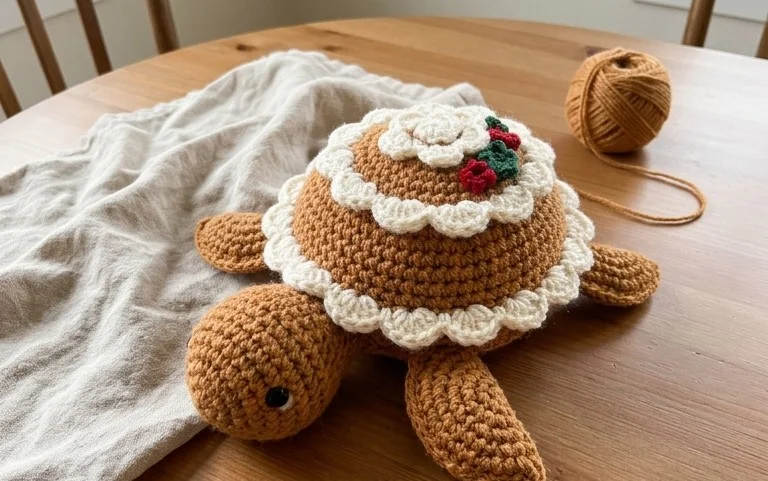
Warm cinnamon-brown yarn gives this little turtle the look of a gingerbread treat, while pale icing-style details make its shell feel extra festive. The finished amigurumi has a soft, rounded body and a sweet expression, so it fits right in with holiday decorations or a handmade gift basket. Beginners can take their time with the simple single-crochet fabric, and anyone who enjoys making small gifts will appreciate how a few color changes bring the character to life. You’ll learn how the pieces come together, how to shape the shell with basic increases and decreases, and how to add the finishing details. It’s a satisfying project to work on in a few relaxed sessions, with plenty of room to personalize the colors or decorations.
Why You’ll Love This Pattern
A firm cotton dishcloth with a simple single-crochet texture is useful at the sink and easy to finish in an evening. This beginner-friendly pattern is worked flat in rows, so you can practice even edges without joining rounds or shaping a three-dimensional piece.
The small square is a practical way to use one skein of cotton yarn, and the repeated rows make it easy to pick up after a break. Cotton stands up to regular washing and gives the cloth enough texture for everyday cleaning. A finished cloth also makes a useful handmade gift, especially when paired with a bar of soap or a kitchen towel.
The rows were easy to keep track of, and the cotton makes a sturdy cloth I reach for every day.
— Lena, home crocheter
Pattern Overview & Skill Level
- Skill Level: Beginner. You need to chain and work single crochet stitches.
- Approximate Time: About 2–3 hours, depending on your pace and how often you stop to check your edges.
- Construction: One flat square worked back and forth in rows, without a separate border or seam.
- Finished Dimensions & Sizing: Approximately 6.5 × 6.5 in (16.5 × 16.5 cm) after washing and laying flat. Exact size varies with tension.
Materials & Supplies Needed
- Yarn: About 45–55 yd (41–50 m) of worsted-weight (#4) 100% cotton yarn. One solid color makes it easy to see each stitch; use a contrasting shade if you want to make the rows easier to follow.
- Hook: 5.0 mm / H-8 crochet hook. If your stitches are very tight, try a 5.5 mm / I-9 hook, knowing the cloth may finish wider and use more yarn.
- Notions: Tapestry needle for weaving in the starting and ending tails, scissors, and an optional ruler or tape measure.
- Substitutions: Use smooth, washable cotton or a cotton-acrylic blend of similar thickness. Pure cotton absorbs water well and has a firm feel; a blend may dry faster but can feel less absorbent. Avoid fuzzy or novelty yarn because it hides the stitch tops and makes the cloth harder to wash clean.
For a useful gauge check, make a 4 in (10 cm) square of single crochet with your chosen hook. Aim for about 16 stitches and 16 rows. The finished size matters more than matching this gauge exactly, but a much tighter or looser swatch will change the cloth dimensions and yarn use.
Stitch Guide & Abbreviations (US Terms)
- ch = chain.
- sc = single crochet. Insert the hook into the stitch, yarn over and pull up a loop, yarn over and draw through both loops on the hook.
- st(s) = stitch or stitches.
The turning chain at the beginning of each row does not count as a stitch. Work the first single crochet into the first stitch, directly beside the turning chain. This keeps the row at 26 stitches and helps prevent the edges from gaining or losing stitches.
Step-by-Step Pattern Instructions
Dishcloth
Foundation: Ch 27. The chain of 27 makes 26 working stitches, because the first stitch is worked into the second chain from the hook.
- Row 1: Sc in the second ch from the hook and in each ch across. Turn. (26 sts)
- Rows 2–26: Ch 1, sc in each st across, working the first sc in the first stitch beside the turning chain. Turn. Repeat this row for every row from 2 through 26. (26 sts each row)
After Row 26, fasten off, leaving a tail about 6 in (15 cm) long. Pull the tail through the last loop to secure it. Use a tapestry needle to weave in both ends through several stitches on the wrong side, changing direction once so the tails are less likely to work loose. Trim the remaining yarn close to the fabric without cutting a stitch.
Lay the cloth flat and check that its sides are square. If it measures slightly smaller or larger than 6.5 in, that is usually a tension difference rather than a pattern error. Wash and reshape it before measuring again, since cotton can relax after its first wash.
Care & Washing Instructions
- Wash cotton dishcloths in a machine on a warm cycle, around 40°C / 104°F, or by hand in warm water with mild detergent.
- Dry flat when possible; reshape the corners while the cloth is damp, or tumble dry on low if the yarn label permits it.
- After washing, smooth the cloth into a square and let it dry flat. Follow the yarn label if you use a fiber other than cotton.
Pro Tips & Common Mistakes to Avoid
- Keep your tension relaxed and consistent. If the foundation chain is much tighter than the rows, the bottom edge will pull inward. You can make the starting chain with a hook one size larger, then switch to the 5.0 mm hook for Row 1.
- Count 26 stitches at the end of every row. Place a stitch marker in the first stitch of a row if you tend to miss the edge stitch; move it up as you work.
- Weave in each tail on the wrong side, passing the needle through the backs of several stitches and then changing direction. Do not pull the yarn so tightly that the fabric puckers.
- To make the cloth larger, add an even number of chains and work the same number of single crochets across, then add rows until the height matches the width. A wider or longer cloth takes more yarn, so have an extra skein available if you increase both dimensions.
Frequently Asked Questions
Can I use acrylic yarn instead of cotton?
You can, but acrylic is generally less absorbent and may feel different when wet. Choose a smooth, washable yarn with a similar worsted thickness, and check its label for washing instructions. The cloth’s dimensions may change if the substitute has a different thickness or stretch.
How can I make the dishcloth smaller or larger?
For a smaller cloth, begin with fewer chains and work the same number of rows as stitches across. For a larger square, add chains and rows in matching amounts. Keep an even stitch count across each row and expect the larger version to use more yarn and take longer to finish.
Is this a good first crochet project?
Yes. The cloth uses only chains and single crochet, with no increases, decreases, color changes, or seams. The main challenge is keeping 26 stitches in every row, so count the stitches before turning, especially during the first few rows.
May I sell dishcloths made from this pattern?
Check the designer’s terms before selling finished items, and follow any limits on commercial use or pattern credit. If you sell a cloth, describe the yarn and care instructions accurately, particularly if you used a substitute fiber.
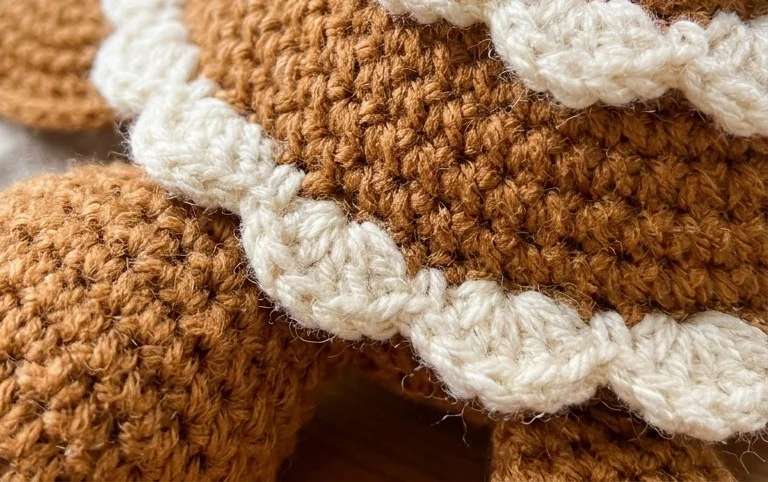
Your gingerbread turtle is ready to sit on a shelf, tuck into a gift, or join a collection of handmade holiday characters. The cinnamon-brown shell and little icing details give it plenty of personality, and the finished piece is a lovely reminder of the time you spent stitching it together. For a simple variation, swap the brown yarn for a pale gingerbread shade or choose a contrasting color for the shell trim. Share a photo of your finished turtle on Pinterest or social media so other crocheters can see your version. When you’re ready for another project, explore more free crochet patterns on the blog, including small amigurumi and seasonal makes.